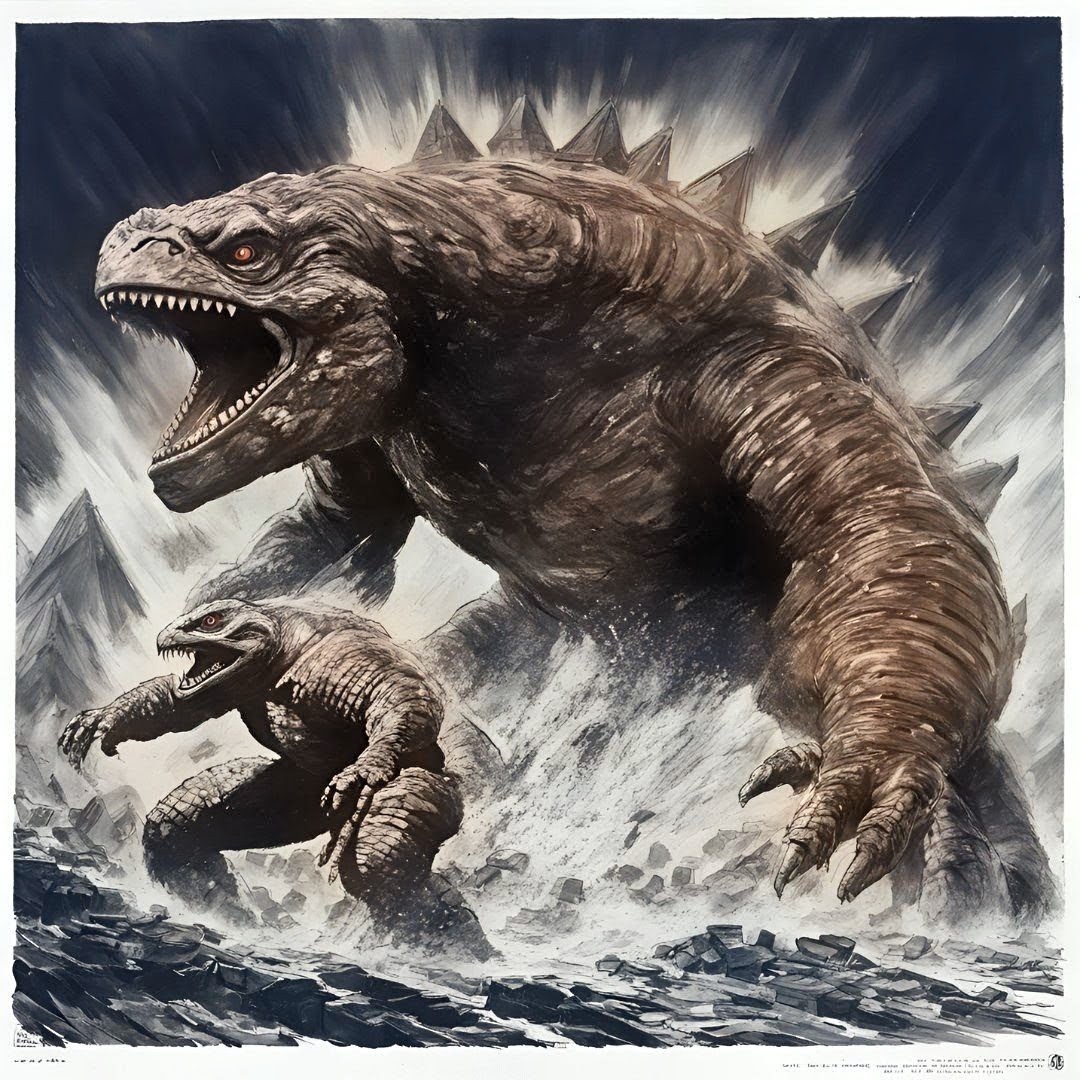
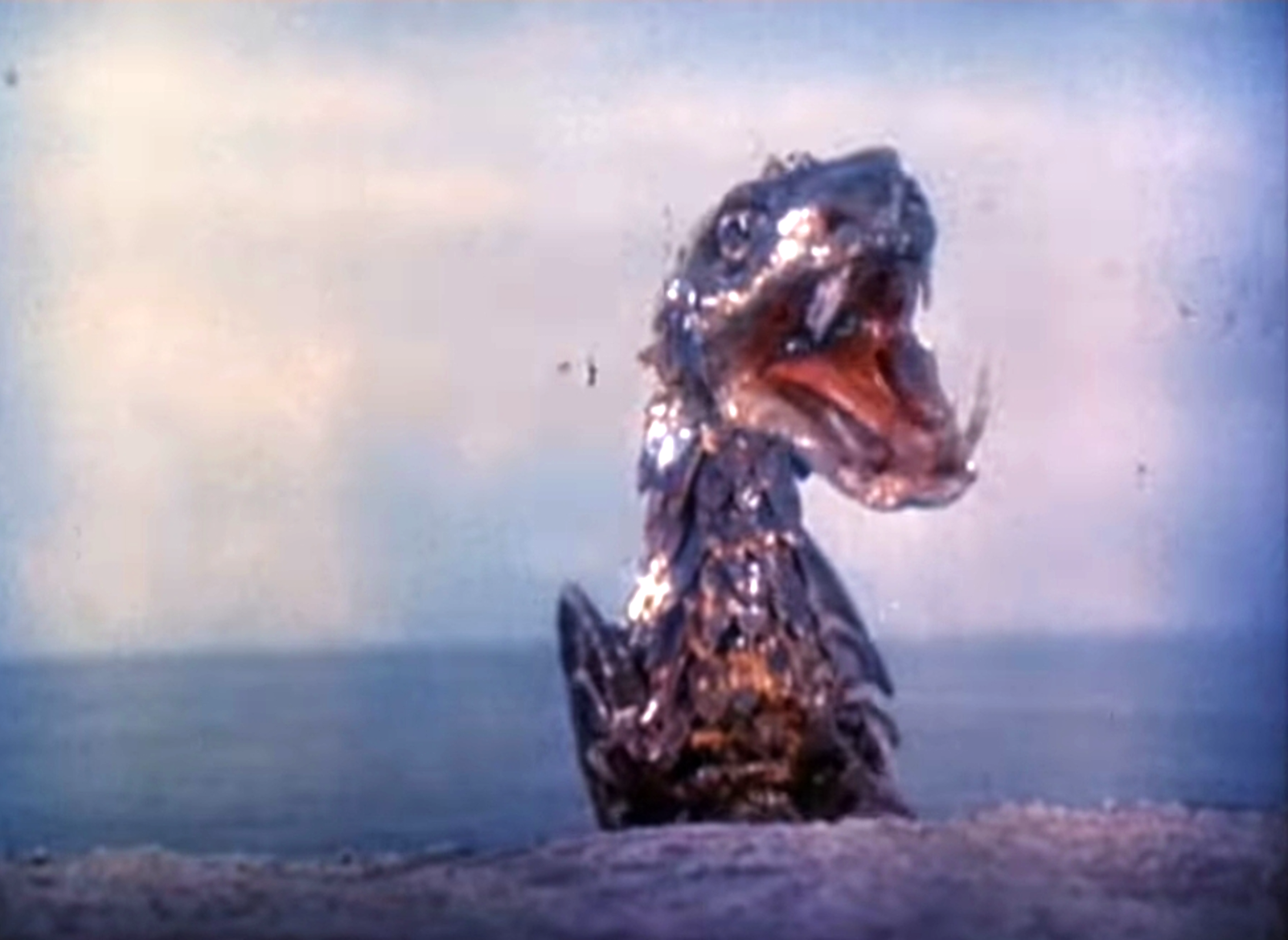
When film historians trace the evolution of giant monster cinema, the conversation almost universally pivots between two poles: America’s stop-motion pioneers (King Kong, The Beast from 20,000 Fathoms) and Japan’s tokusatsu masterworks birthed at Toho Studios. Yet tucked away in the genre’s golden era is a bizarre, often-mocked European anomaly — Denmark’s sole entry in the giant monster sweepstakes: Reptilicus (1961).
At a glance, Reptilicus is easy to dismiss. Co-produced by American producer Sidney W. Pink and Denmark’s Saga Studio, the film is infamous for its marionette-on-a-string special effects, an agonizingly out-of-place Copenhagen travelogue sequence, and green acid-spit added via optical overlays for its American International Pictures (AIP) release.
Look past the awkward puppet work, however, and you’ll find a film that quietly pioneered a core narrative mechanic that would later define the darkest, most body-horror-centric entries of the Godzilla franchise: terrifying, unstoppable cellular regeneration.
The Lapland Specimen & The Regeneration Threat
The inciting incident of Reptilicus strips away the typical nuclear-testing allegory of 1950s sci-fi in favor of biological horror. Miners in Lapland accidentally drill into a frozen prehistoric tail. Transported to Denmark’s National Aquarium, the tail is inadvertently thawed out by careless lab technicians.
Rather than decaying, the tissue undergoes rapid mitosis. The scientists realize with horror that Reptilicus possesses biological regeneration akin to a planarian flatworm or starfish. A single severed segment can regenerate an entire 90-foot organism.
This single plot point utterly upends standard military anti-monster strategy. When the Danish military corners the beast off the coast, a United Nations scientist issues a chilling warning: high explosives cannot be used! Detonating depth charges would shatter the creature into thousands of meat fragments, each capable of growing into an independent, fully realized monster.
From Copenhagen to Tokyo: The Cellular Horror Legacy
While Reptilicus struggled with low-budget execution, its underlying central threat — that the monster’s very biological makeup turns conventional destruction into a mass-multiplication event — foreshadowed major developments in Japanese kaiju cinema:
- The Frankenstein Strain (1965): In Frankenstein Conquers the World (and its sequel, War of the Gargantuas), Toho embraced the same nightmare: severed limbs and rogue flesh-tissues regenerating into separate, living terrors.
- Biollante & Shin Godzilla: Decades later, Hideaki Anno’s Shin Godzilla (2016) grounded its ultimate third-act threat in cellular division: the horrifying reality that every shed scale, dropped tooth, or severed tail segment could sprout a new variant of the creature.
Reptilicus ends on one of the bleakest, most effective cliffhangers of 1960s creature features; as the main body of the beast is sedated by a drug cocktail, the camera cuts to the dark ocean floor, where a severed foot blown off during an earlier artillery strike begins to twitch and grow.
As a piece of technical filmmaking, Reptilicus remains a charmingly flawed product of its era. Still, as an exercise in creature design mechanics, it stands as accidental trendsetting proof that even the most obscure regional B-movies helped lay the groundwork for modern monster horror.
Leave a Reply