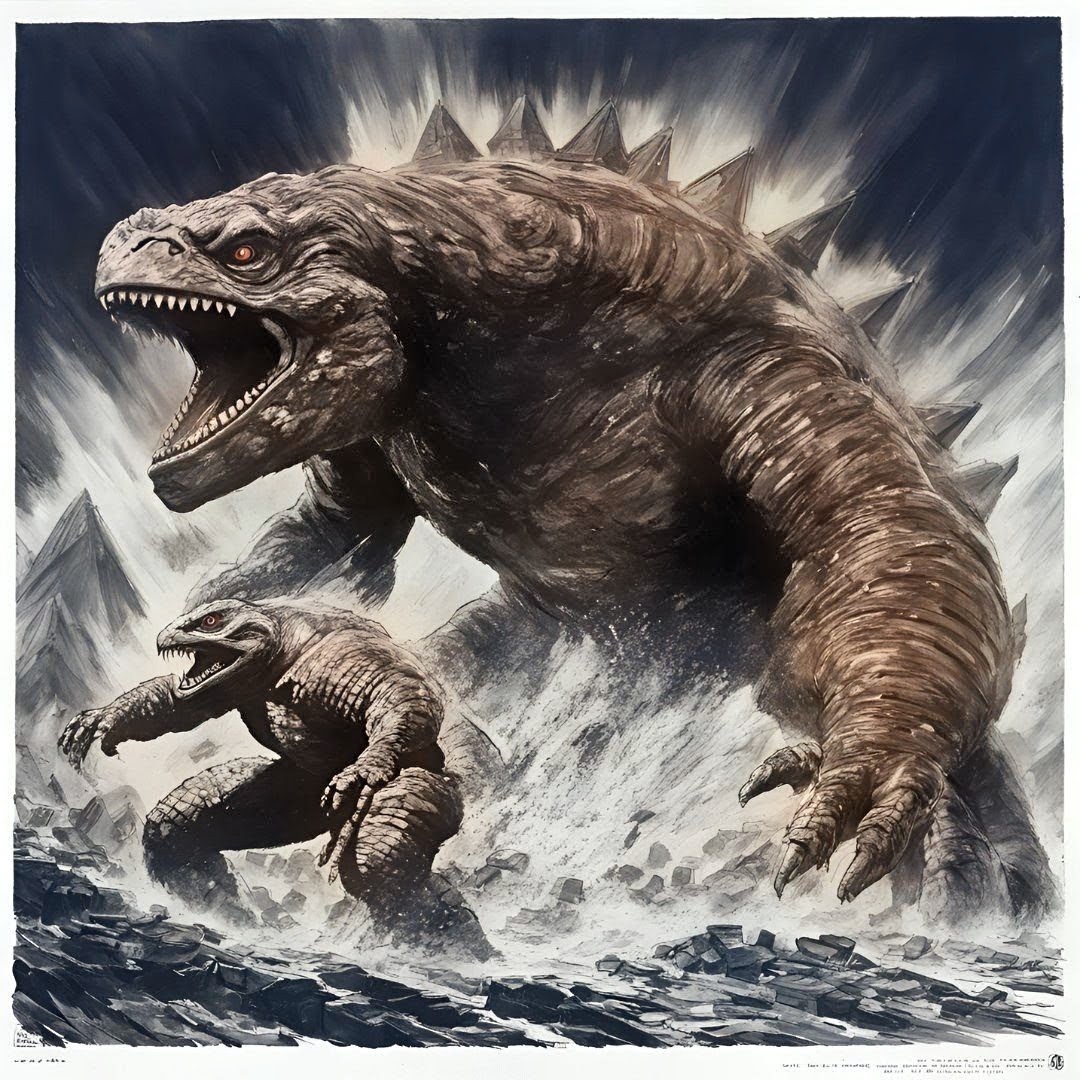
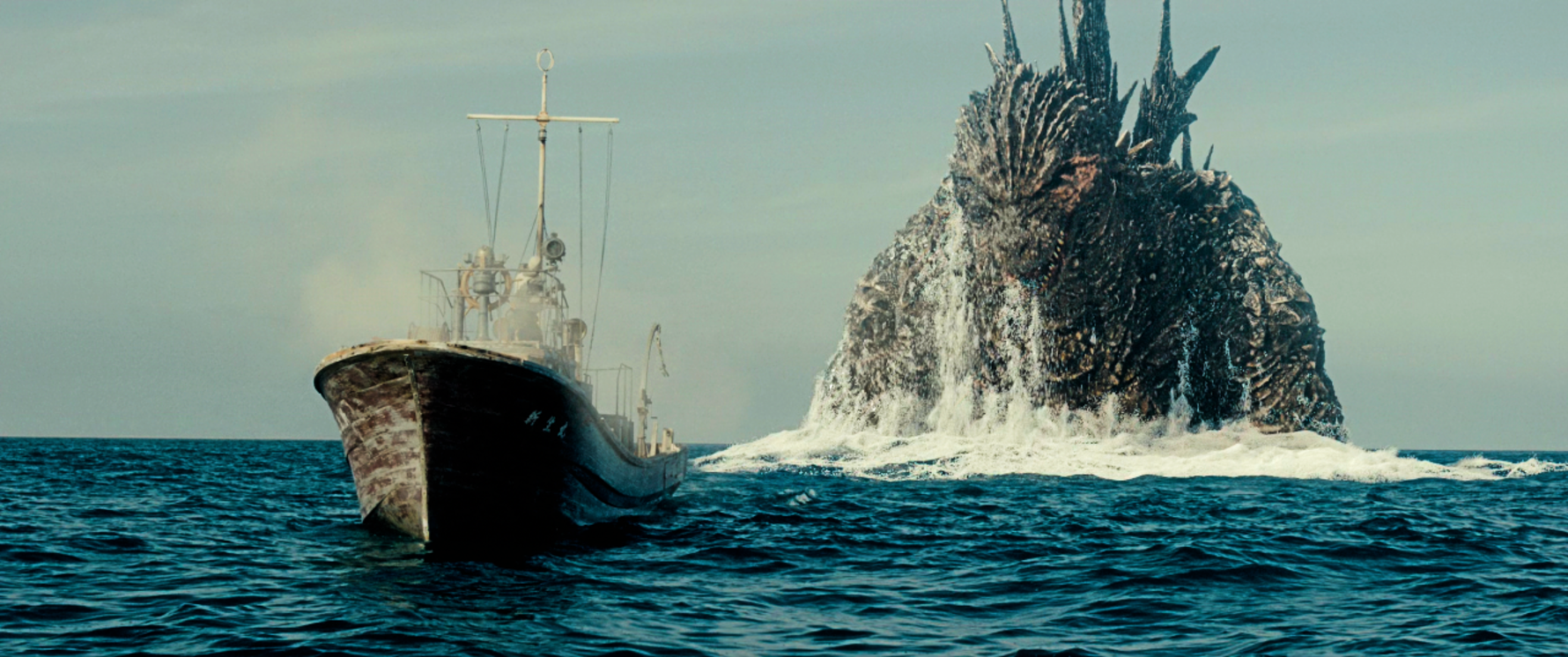
When Takashi Yamazaki delivered Godzilla Minus One, he didn’t just give us a cinematic masterpiece — he gave us a Godzilla that felt terrifyingly heavy, despite his more condensed size. Every step cratered Ginza, every tail-swipe felt like a tectonic shift, and every frame emphasized sheer, unyielding weight.
Now, as the horizon expands toward the next chapter — the heavily anticipated Minus Zero — the buzz around Toho’s flagship monster centers on one glorious fact: Godzilla is getting even bigger, bulkier, and impossibly heavier. This isn’t just a random design tweak to sell new S.H.MonsterArts figures. In the cinematic kaiju realm, mass is storytelling (it’s character, it’s everything).
The Architecture of Absolute Mass
In early Toho suit-mation, weight was simulated through slow-motion photography and practical dust effects. But Minus One redefined creature scale by combining digital precision with the physics of massive real-world structures accurate to their time period. For Minus Zero, leaning into an even bulkier, hyper-dense silhouette serves a multi-faceted narrative purpose:
- The Immovable Object: A wider stance, thicker thighs, and heavily reinforced dorsal plates instantly signal a creature that has absorbed catastrophic damage and mutated into an unkillable biological fortress.
- Tectonic Destruction: Increasing the creature’s bulk shifts the destruction mechanics. It’s no longer just about radioactive heat rays; it’s about kinetic energy. A heavier Godzilla means his mere presence reshapes the terrain before he even opens his jaws.
- Practical Weight in a Digital Era: CGI often fails when objects feel weightless. By accentuating low-center-of-gravity mass, the visual effects team ensures that every step carries believable, bone-rattling inertia.
Why “Big & Bulky” Works for Modern Audiences
Slasher icons rely on speed and stealth, but kaiju thrive on spectacle and scale. Modern filmgoers — especially accustomed to watching on their phones on the way to work in the back of an Uber — respond to striking, high-contrast imagery. A massive, towering silhouette popping off a mobile screen commands instant authority.
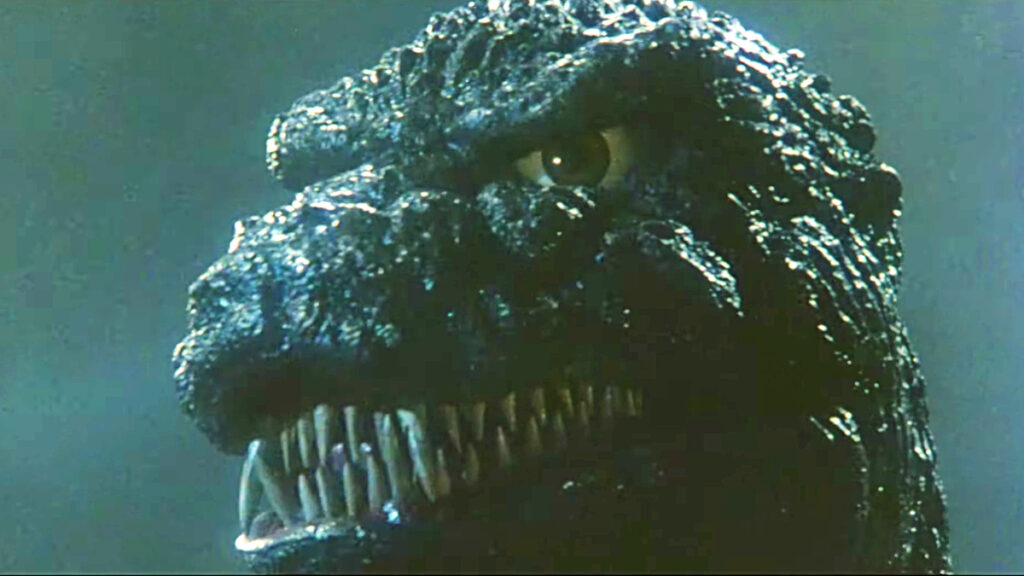
When you look at the evolution of Godzilla from the sleek 1954 original to the massive Heisei powerhouse of the nineties, the monster always gets bigger as the threats escalate. Giving the Titan an imposing, ultra-heavyweight physique in Minus Zero honors that classic Toho progression while setting a new visual benchmark for modern monster cinema.
The beauty of the Minus era is its refusal to turn Godzilla into a nimble superhero. He isn’t doing backflips or running at full sprint. He is an overwhelming force of nature — a walking mountain of irradiated flesh and bone. If Minus Zero doubles down on that sheer, terrifying bulk, it won’t just captivate long-time tokusatsu purists; it will remind the entire film industry exactly who owns the throne.
Leave a Reply